


Takeaways from the Weeztix Hub panel at ADE 2026
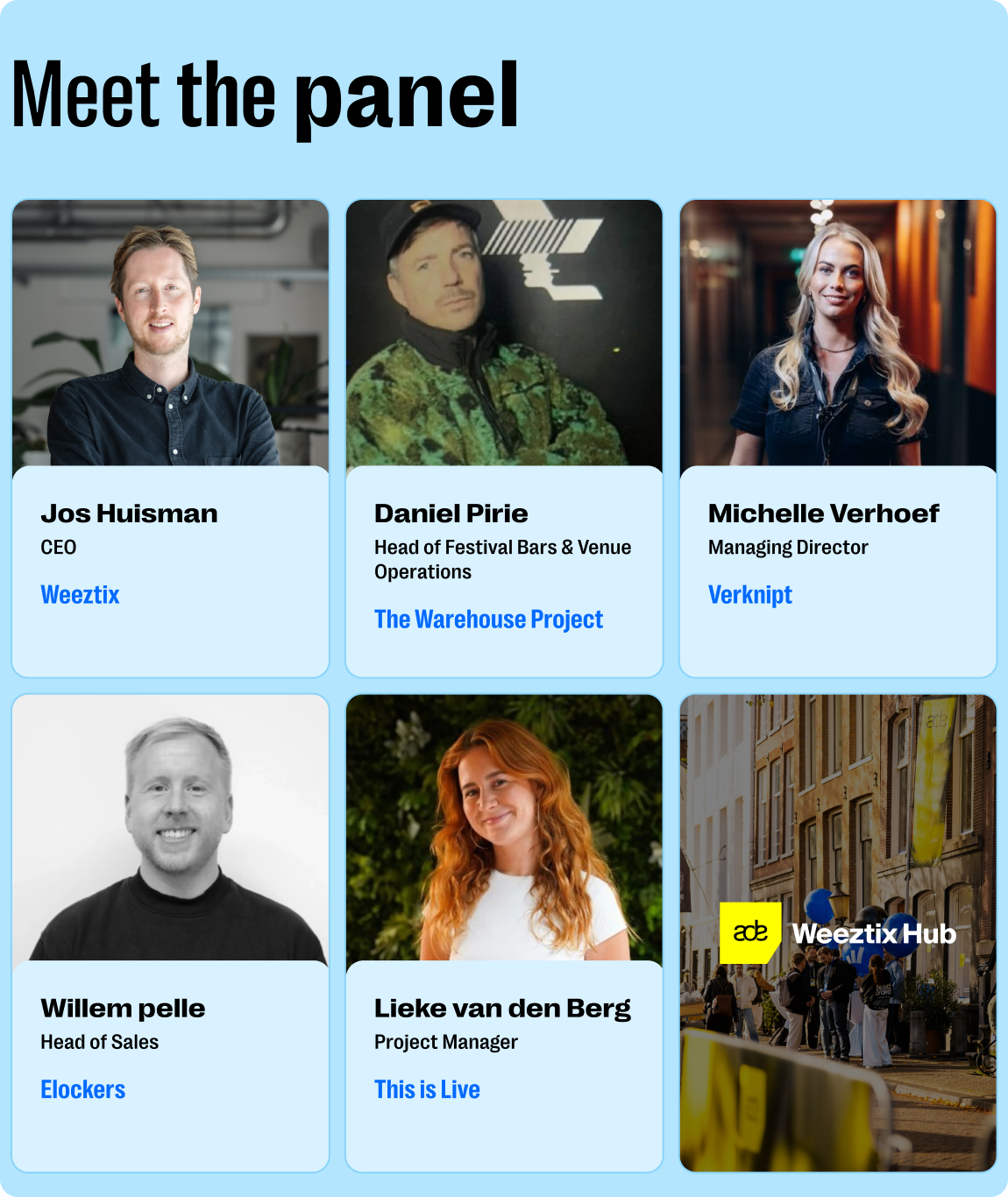
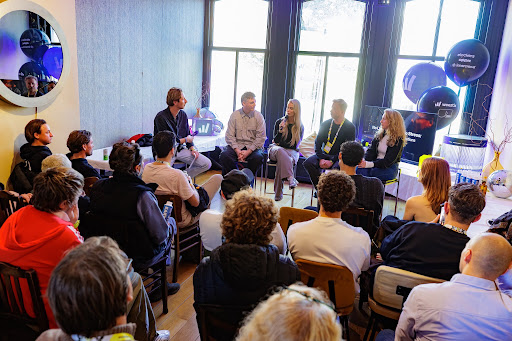
At this year’s ADE, we hosted a panel in the Weeztix Hub under a simple banner: no lines, no cash, no stress. Moderated by Weeztix commercial director Jos Huisman, it brought together four people who, between them, have run thousands of festivals and other events: Dan Pirie, head of operations at The Warehouse Project; Michelle Verhoef, managing director of Verknipt; Willem Pelle, head of sales at eLockers; and Lieke van den Berg, project manager at This is Live.
The theme was the visitor’s journey from the door to the dance floor. Jos framed the session around one measure: how long it takes someone to get from the entrance to the dance floor. For visitors, every minute before that point feels like waiting time. Keep reading to learn the six ways our panellists shorten that waiting time at their events.
Where visitors lose time
Most visitors will recognise the moments that slow down a night out:
- Tokens: buying tokens before you can order a drink.
- Cloakroom or lockers: queuing in cold weather, when everyone is carrying a jacket.
- Bars: queues that spill across walkways and break up the crowd.
- Entrance: the scramble at the gate, when people are still looking for their ticket as they reach security.
These delays add up. Between lockers, a toilet stop, and the search for tokens, a group can lose up to 45 minutes before reaching the dance floor.
1. Encourage online purchases before the event
Starting with the obvious: The fastest way to shorten queues is to get visitors to buy tickets before they arrive. This also applies to shuttle passes, lockers, and tokens, as attendees spend less time queuing and in transit and more time at the event. Pre-sales also let you forecast capacity more accurately, which helps when a single event can draw an unpredictable international crowd.
Selling lockers online removes a staffed desk and its queue, which cuts costs. Marketing can do the rest: tell visitors that reserving a locker in advance is the fast way in, and most will.
Willem Pelle shared that for eLockers, pre-sale drives the business: the earlier people commit, the more they buy and the better they prepare their visit. As he put it, “If you don’t bring anything to us, we don’t have anything to put away.” Adoption is high in the Netherlands and lower in some other markets, so part of the work is explaining the system to audiences who are new to it.
2. Plan with your event data
Lieke plans each edition of This is Live’s events against years of event data, from entry and the bars peaks to the spots where pinch points form. Simple ratios give her a starting point, such as one scanner or one security staffer per thousand visitors, and bar crews are scaled to how much a crowd drinks: a lively Dutch folk music line-up needs more staff than a techno night.
Spend per head is another important factor. One visitor at a high-spend show can be worth three at another, so planning bar staff around the demographic and typical spend gives a more accurate picture than headcount alone. Data helps you set a plan, and experience tells you when a particular night will behave differently.
3. Control the flow of attendees
Michelle shortens queues by shaping demand before adding staff. If you schedule the most popular acts too early, everyone will arrive at once, causing congestion. By programming a softer start, you keep the entrance from getting too crowded.
However, if you schedule too conservatively, you get the opposite problem: a quiet opening. If everyone arrives a few hours in, you end up with the same queue you were trying to avoid, just later in the day. The sweet spot is a line-up that gives people a reason to trickle in steadily.
Other measures help too. A strict bag-size limit speeds up searches, and buffer zones set the pace for scanning. For large shows, timed early-access tickets and multiple entrances bring a share of the crowd in ahead of the rest. Security can move with the night as well, shifting from the gates to the stages as arrivals slow.
A little friction can work in your favour. Slowing entry at a peak, or temporarily closing a busy token bar, can prevent the next bottleneck from forming. Factor in your checks as well: in the south of the Netherlands, stricter zero-tolerance checks lengthened queues so much that the one-per-thousand ratio had to be rebuilt. Most organisers aim to keep waits well under half an hour.
4. Go all in on self-serve
Dan’s team went all in on automation. They tested a full-scale self-serve bar, 30 metres long with 60 taps, against a busy conventional bar, and installed lockers in real volume. He has also turned self-serve walls into branded experiences and is following features such as facial recognition, which can greet a returning customer and offer their last order again.
Self-serve bars move queues faster and reduce the time it takes to order your first round of drinks. Bars and lockers can go anywhere on site to spread out the crowd, and knowing how many people need to collect their belongings from a locker lets you estimate how a crowd will exit the event.
However, some adoption issues will take time. Automated bars see less footfall than staffed ones while visitors get used to them, though use is growing. As with supermarket self-checkouts, attendees will likely warm up to automated bars as more organisers adopt them. Keep in mind that you’ll still need plenty of staff on the ground for anyone who feels unwell.
5. Build for the moment it breaks
Every layer of technology adds a dependency, so the systems underneath need to keep working when something fails. At the entrance, the Weeztix ticket scanner app keeps scanning even if a device drops out of sync, and all Weeztix point-of-sale devices run fully offline in both closed-loop and open-loop modes. That means the entrance keeps moving and the bar keeps serving when the internet drops. The same principle applies to other hardware too: a locker door should open without Wi-Fi or mains power on the busiest night of the year.
6. Connect everything in one system
At many events, security, event control, production and retail each work from their own systems and spreadsheets. The next step is a single dashboard where every department sees the same live picture, bringing ticketing, entrance, and payments together, with AI speeding up integration. Some organisers are already on the way, with a control room, people-counting gates, cameras and licence-plate check-in for backstage parking, all within the terms and conditions visitors accept.
Connected data comes with responsibility. Major contracts now require proper cybersecurity and data-protection measures as standard, and organisers must ensure data is used properly. Treat your event’s data as a valuable asset: store it safely, and don’t go emailing your spreadsheets around.
Giving people their time back
The panel kept returning to one core message: give people their time back. Every minute cut between entry and the dance floor is a minute more spent on what they came for. That is easier when ticketing, access control, cashless payments and accreditation run on one platform, which is possible with Weeztix.
Want to make sure your attendees get from the door to the dance floor as quickly as possible? Plan a demo with our team.
