





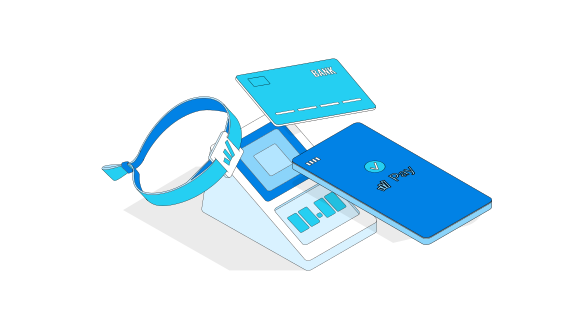
Cashless payments are often associated with large-scale festivals and stadium productions. However, for medium-sized events welcoming between 3,000 and 10,000 visitors, the impact can be just as significant. At this scale, organisers operate in a space where operational efficiency, financial clarity, and visitor experience are closely intertwined.
What matters most is keeping things under control on site: ensuring bars can handle peak moments, reducing pressure on staff and volunteers, and protecting margins in an environment where every operational decision has consequences. Medium-sized events often operate with smaller teams, temporary infrastructure, and concentrated sales windows. That combination makes reliability and speed essential.
Cashless systems bring structure to this environment. By digitising transactions, organisers gain better oversight of sales, smoother on-site flows, and clearer post-event reporting. Instead of reacting to issues in real time, teams can rely on a payment setup designed to support high-demand moments and deliver accurate financial insights.
For organisers looking to professionalise operations without adding unnecessary complexity, cashless provides a scalable foundation that strengthens both operational control and long-term growth.
Where pressure builds first at medium-sized events
Every edition raises the same practical questions. Can the bars handle a sudden influx of visitors? What happens if connectivity drops at a crucial moment? How can queues be managed without increasing staff costs? After the event, how do you evaluate performance with precision?
Medium-sized events operate in temporary environments with limited room for error. Demand spikes quickly and often unpredictably. Staffing structures are tighter than at large festivals, and operational flexibility is limited.
Many of these challenges stem from payment flows during peak hours, connectivity reliability, and post-event financial visibility. Cashless systems address each of these areas directly.
How cashless changes spending behaviour
One of the most valuable effects of a cashless system is its influence on on-site spending behaviour. When visitors load credit onto a wristband or card, their purchasing decisions tend to feel smoother and more natural. There is no need to handle physical cash, calculate change, or re-enter payment details for every transaction. The result is a faster, more intuitive buying experience that encourages repeat purchases throughout the event.
This has a measurable impact on average spend per visitor. Because transactions are processed in seconds, queues move faster, and bars or food stands can serve more customers per hour. Shorter waiting times reduce drop-off moments where visitors might otherwise walk away. Over the course of a full event day, this operational efficiency directly translates into increased turnover.
Beyond transaction speed, cashless also enables more strategic revenue management. With every purchase digitally recorded, organisers gain insight into what sells best, when peaks occur, and which stands outperform others. This visibility allows you to experiment with pricing strategies, introduce time-based promotions during quieter moments, or adjust stock and staffing levels based on real demand.
You can also implement targeted incentives. For example, offering bonus credit during top-ups encourages higher upfront spending. Limited-time offers during specific time slots can drive traffic to particular areas of the site. Crew perks or partner discounts can be managed directly within the system, creating structured incentives without adding administrative complexity.
By combining behavioural ease with actionable data, cashless systems help medium-sized events unlock revenue potential that would otherwise remain untapped.
Keeping payments stable in temporary environments
Medium-sized events often take place in locations where connectivity fluctuates. Temporary sites, high visitor density, and short peak windows create pressure on networks, and sometimes those networks can collapse.
Cashless systems designed for events operate offline when necessary. Transactions are stored locally and synchronised once connectivity is restored, so bars can continue serving without interruption, and revenue collection remains stable.
This reliability provides peace of mind for organisers and allows teams to stay focused on the visitor experience.
Generating revenue before, during and after the event
For medium-sized events, financial stability is closely tied to the smooth flow of payments throughout the event lifecycle. Cashless payments introduce a more predictable structure to this process, helping organisers manage revenue at every stage.
Before the event even begins, visitors can load credit in advance. Many attendees choose to top up when purchasing their ticket or shortly before arrival. This means a portion of event revenue is already secured before gates open. For organisers, this early inflow improves cash flow and provides greater confidence when covering operational costs such as suppliers, logistics, or staffing.
During the event, transactions become significantly faster. Payments are completed with a simple tap, keeping queues moving and allowing bars, and stands for food and merchandise to serve more visitors in less time. When service points operate more efficiently, overall sales capacity increases. At peak moments, this speed helps prevent lost sales due to long wait times.
Cashless also introduces real-time financial visibility. Organisers can monitor revenue per bar, product category, or location as the event unfolds. This allows teams to respond immediately to changing conditions. If one bar becomes overwhelmed, staff can be redeployed. If a certain product sells faster than expected, stock can be replenished quickly. These small adjustments throughout the day often translate into meaningful gains in total revenue.
After the event, the financial picture becomes much clearer. Every transaction is already recorded and organised within the system, which simplifies reconciliation and reporting. Organisers can easily review total turnover, product performance, and visitor spending patterns. Remaining balances on wristbands or cards are handled transparently in accordance with the event’s refund policy and are clearly reflected in the reporting.
Together, these elements create a more structured financial cycle around the event. Revenue arrives earlier, transactions happen faster on-site, and post-event analysis becomes easier and more accurate. For organisers, this level of clarity supports better planning and stronger financial control from one edition to the next.
Continuous improvement through data
After the event, WeezPay provides a detailed overview of on-site performance. Sales patterns reveal when pressure peaked, which locations generated the highest revenue, and how visitor flows evolved throughout the day.
Organisers can use this data to refine bar placement, adjust staffing levels, and optimise stock planning for the next edition. Decisions are grounded in measurable insights rather than assumptions.
For medium-sized events, this results in steady operational refinement year over year.
The benefits in a nutshell
For organisers of medium-sized events, cashless can give you peace of mind during your event. Our cashless payment solutions give you:
- Stable payment flows
- Confidence that bars perform during peak demand
- Stability when connectivity fluctuates
- Measurable insights
If you would like to know more about how you can use cashless at your event, you can check out our comprehensive cashless guide for event organisers.